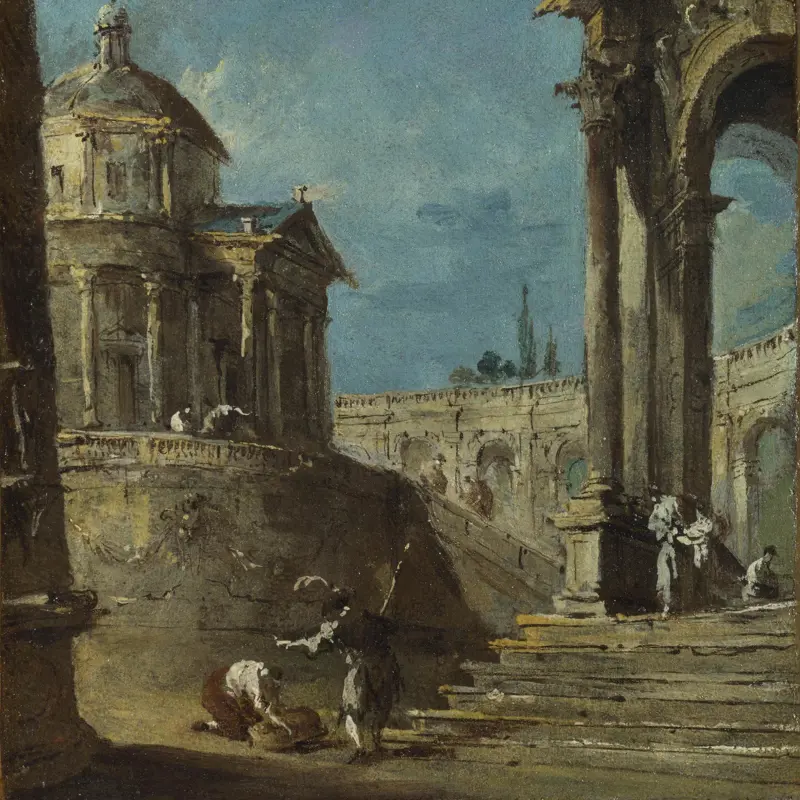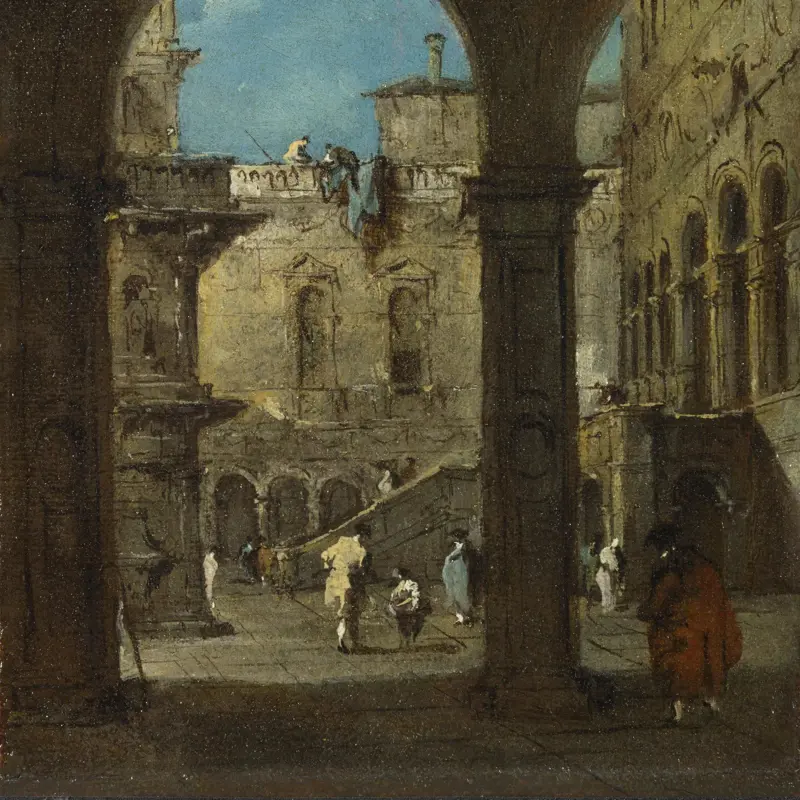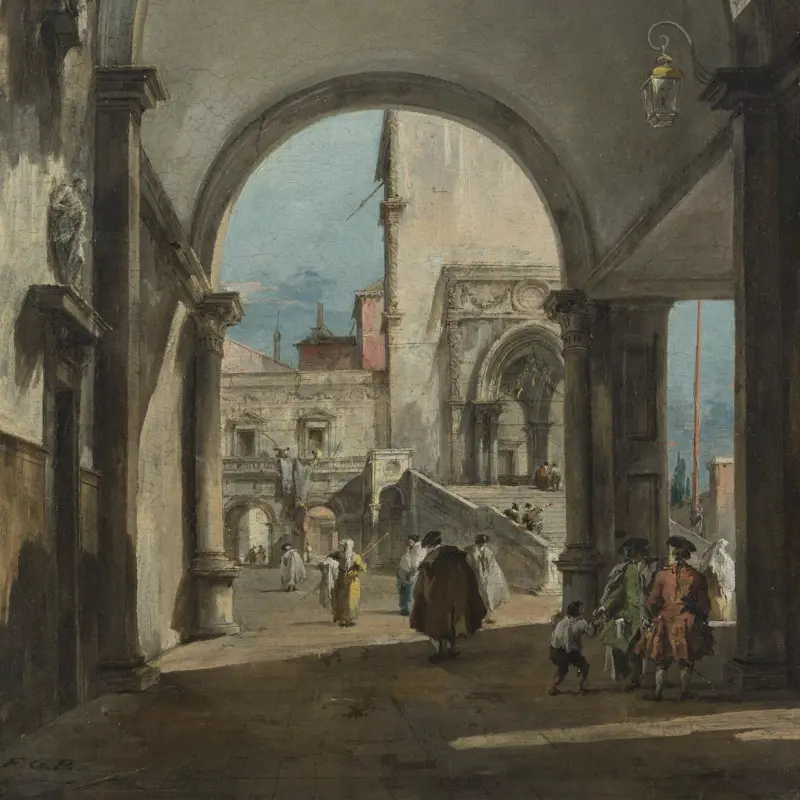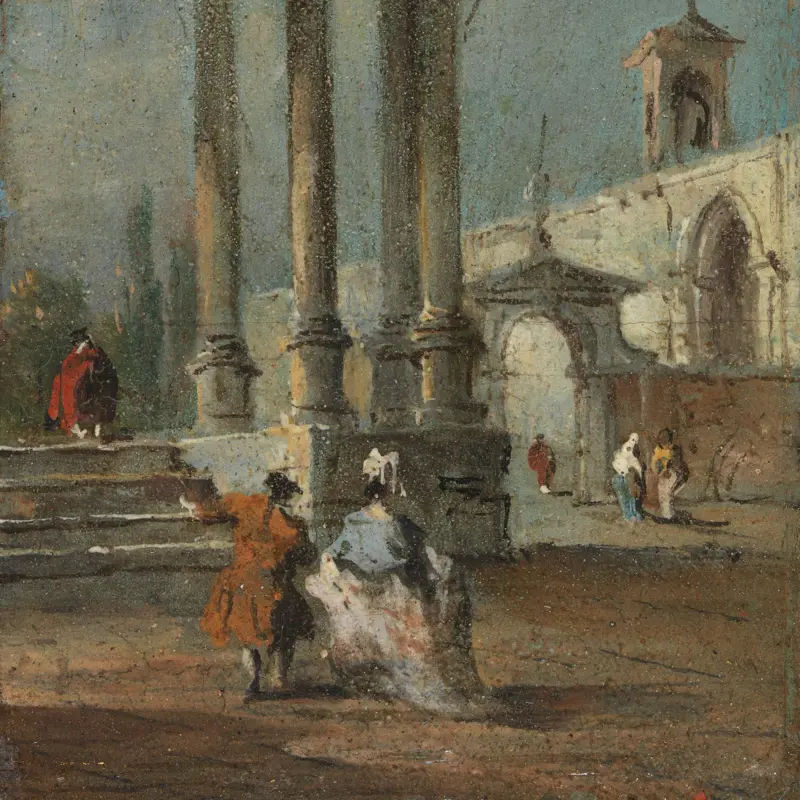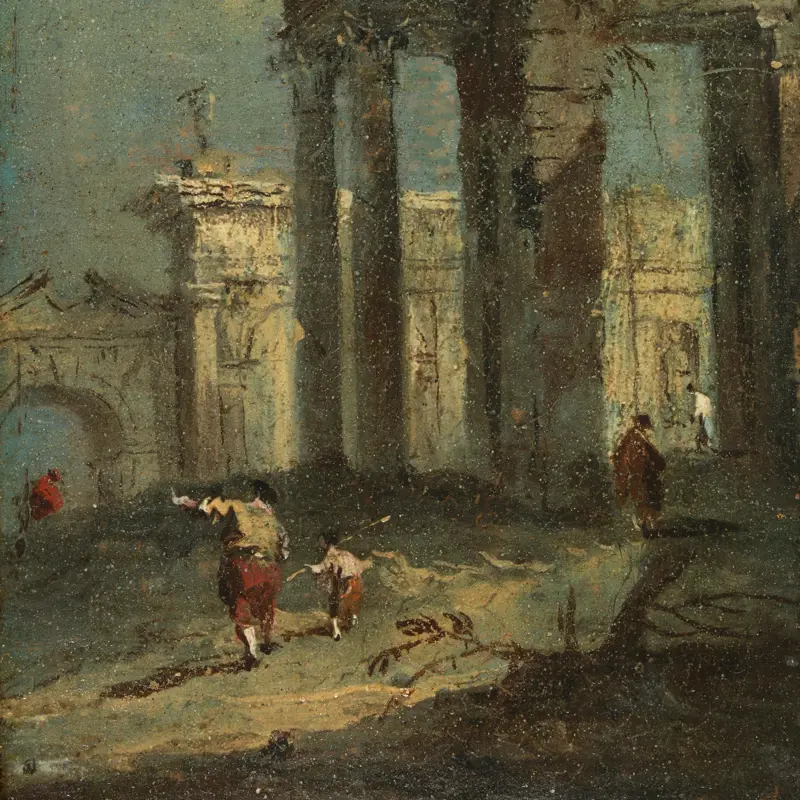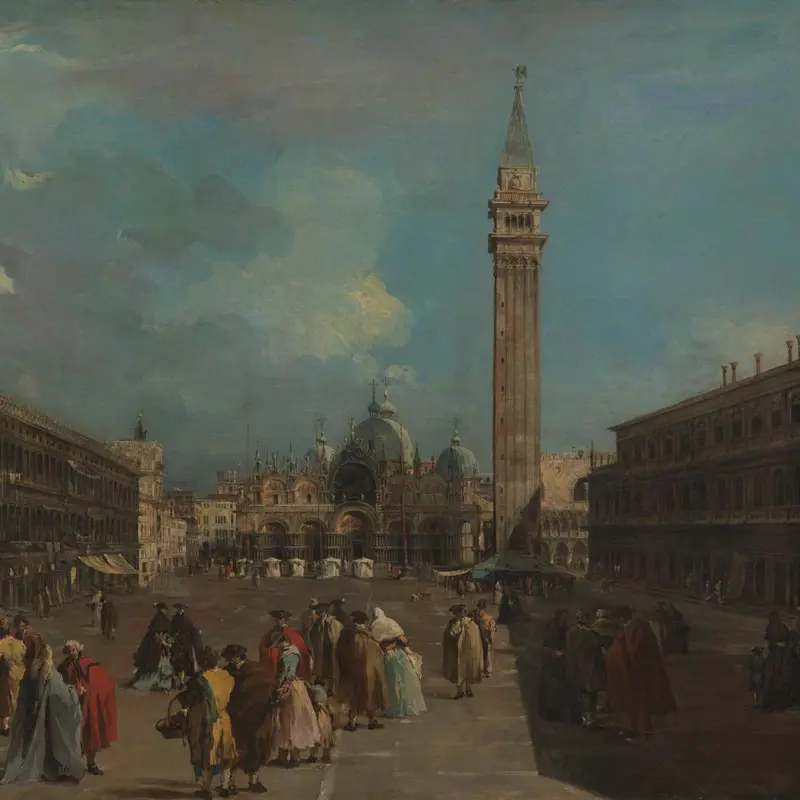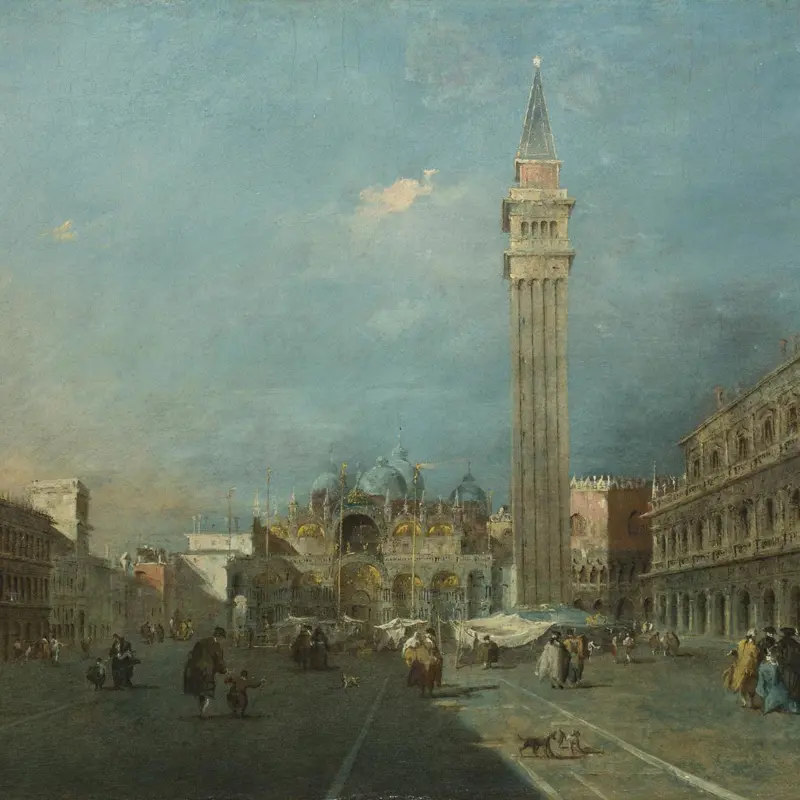
Francesco Guardi, 'Villa del Timpano Arcuato at Paese', about 1782
About the work
Overview
Guardi painted this picture as part of a commission from a demanding client on the Italian mainland rather than Venice, which was the artist’s usual source for his lively, entertaining images.
The newly built house stands at the top of a rise. The white stone shines in the cool, clear sunlight that suggests a morning in the Veneto region before the full midday heat. The arched pediment that gives the house its name faces us. There are further arches on the wings at either side. Tall arcading at ground level promises shade when the sun gains strength.
Guardi was faced with a vast area of rough, patchy grass in front of the wall with no Venetian canal to enliven the scene. His reaction was to fill it with little entertainments for the viewer to discover and reinterpret at will: fashionable sightseers, a boy begging, a newfangled phaeton, its giant wheels spinning.
In-depth
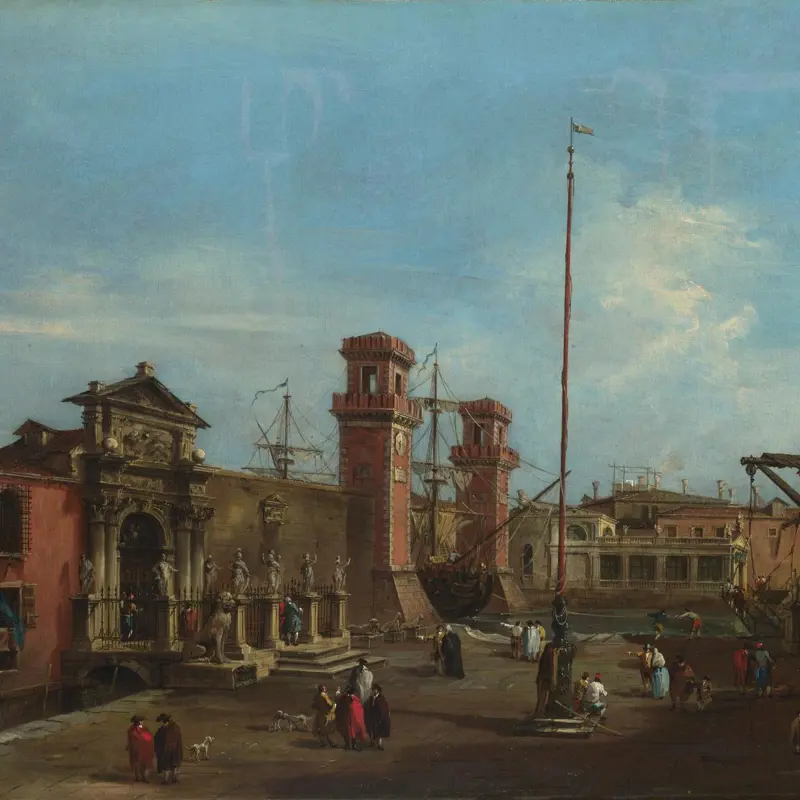
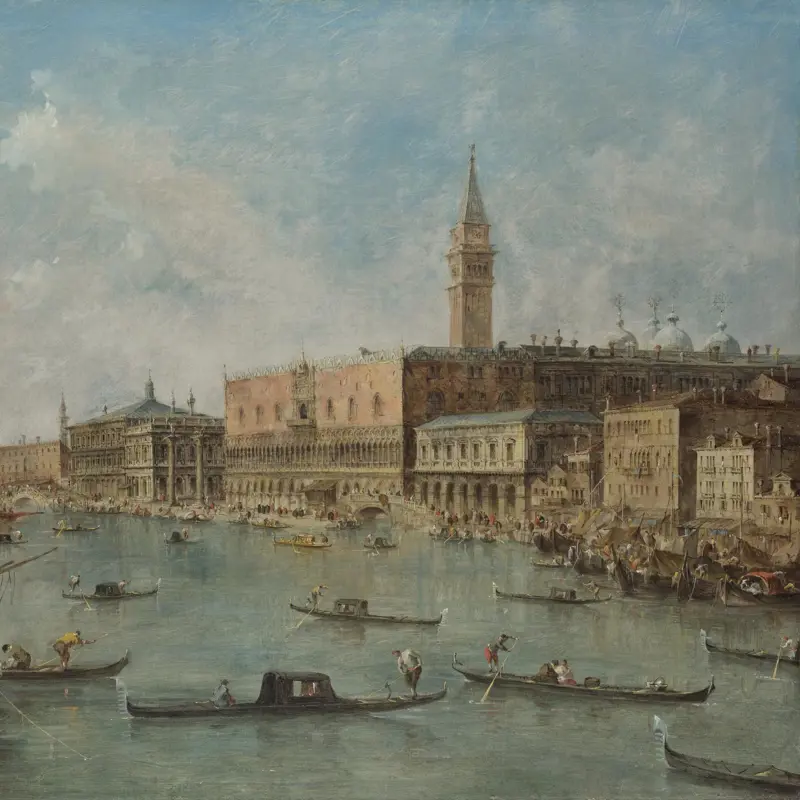
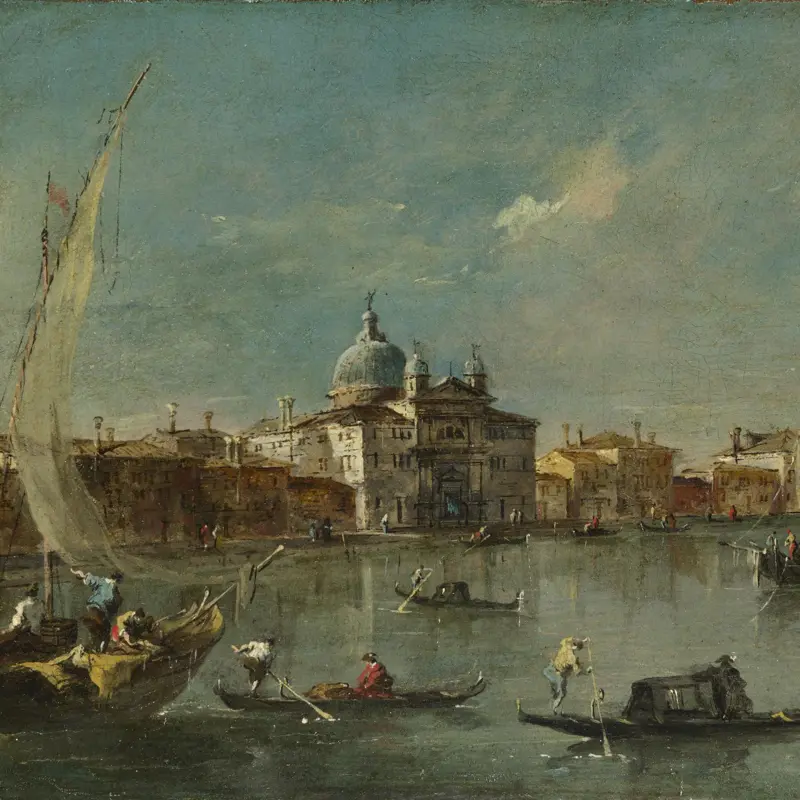
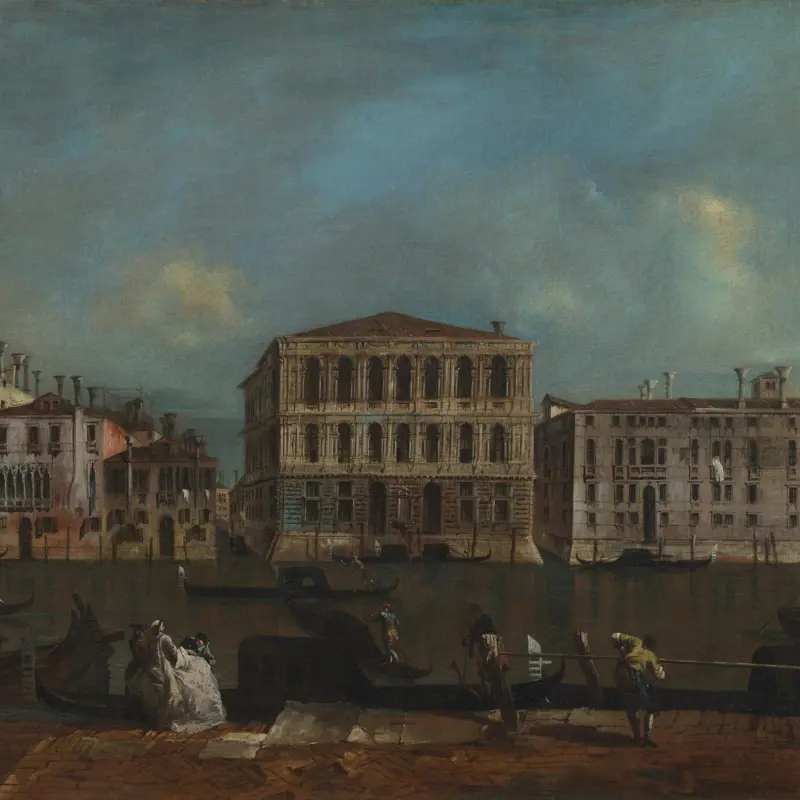
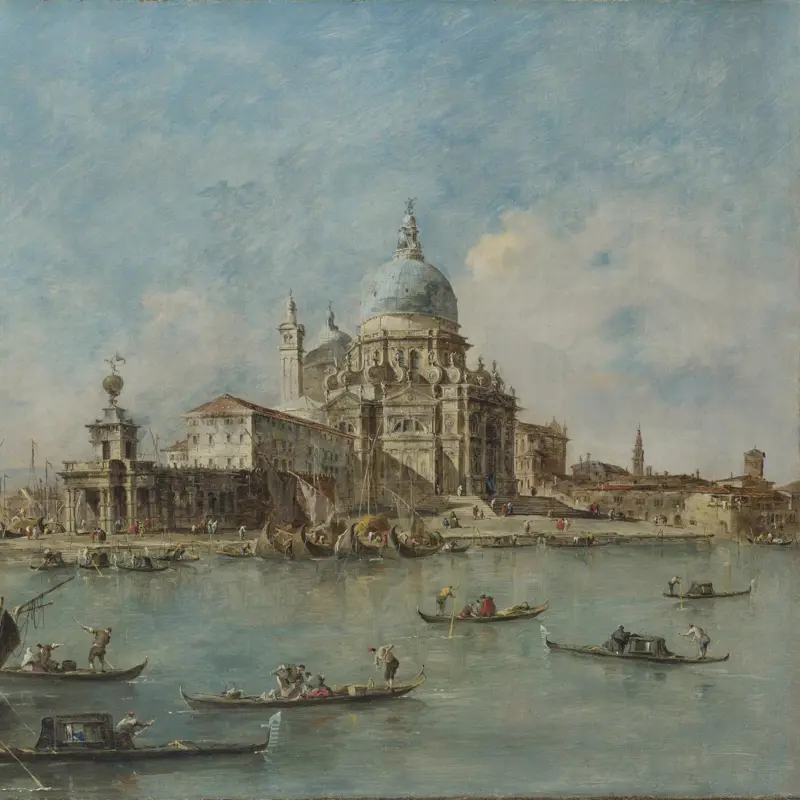
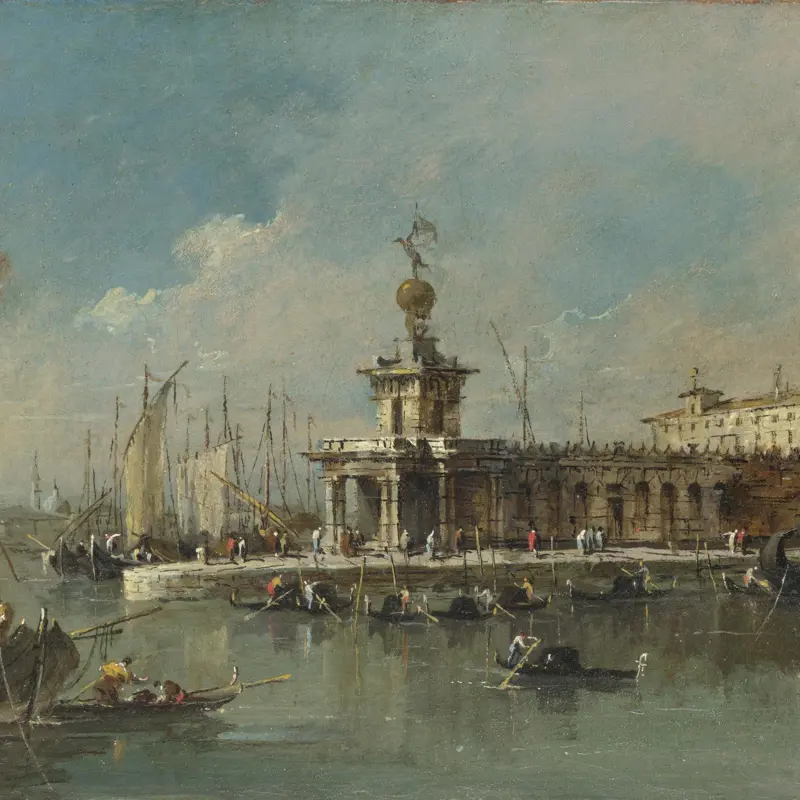
Francesco Guardi must surely have intended his clients to enjoy his pictures, always finding something new to delight them. This one is no exception. Like Canaletto, the other great artist of eighteenth-century Venice, he painted vedute, detailed views of the city for visitors on the Grand Tour. Unlike Canaletto, Guardi painted in a free, almost sketchy style that captured the fleeting light and movement in the city. He seldom left it to paint elsewhere.
This commission was different. It was for four paintings, each showing a different view of two houses in the Veneto region of the Italian mainland. These belonged to John Strange (1732–1799), an important British diplomat, geologist and collector. Three of the pictures were of Villa Loredan, Strange’s country house in Paese, a small town west of Treviso, on the road to Castelfranco Veneto. The fourth was this picture, the neighbouring Villa del Timpano Arcuato, in which he may have kept part of his vast library, collections and other scholarly joys.
Strange was a demanding client, giving strict instructions about the paintings. This was foreign to Guardi. In the most colourful, Villa Loredan, Paese (Metropolitan Museum of Art, New York), Guardi shows himself in a scarlet cloak. He is on his knees at a bench, drawing, perhaps a quiet joke at Strange’s expense.
The newly built house stands at the top of a rise. The white stone shines in the cool, clear sunlight that suggests a Veneto morning before the full midday heat. The roof is tiled and the arched pediment (or timpano) that gives the house its name faces us. There are further arches on the wings at either side. Tall arcading at ground level promises shade when the sun gains strength.
Above, there are two tiny, central balconies and every window is open. Bedding hangs out to air from the upper storey, in Venetian fashion. At one or two windows there is the hint of a figure looking out at us. Similarly undefined is the description, in the distance, of the foothills of the Dolomites. In front, a lawn is enclosed by a low wall, a long, sweeping chain of white stone, with jaunty statues spaced along it. The gates are wide open and already sightseers gather.
Guardi was faced with a vast area of rough, patchy grass in front of the wall with no Venetian canal to enliven the scene. His reaction was to fill it with little entertainments for the viewer to discover and reinterpret at will. A breeze bends the top of a tall sapling and billows the voluminous skirts of a woman walking with a partner. A fashionable pair stride under a parasol, perhaps towards the smart carriage bowling along. Nobles are confronted by a boy begging. An outlandish, newfangled phaeton rolls past, its giant wheels spinning.
Even when depicting a place he did not know, and having to placate a difficult client, Guardi could not resist adorning the architecture with flights of fancy. His little characters are so alive, it seems as if next time you look, they may have moved. He presents them to us with the flick of a brush, a feather of paint and, perhaps, the wink of a beady Venetian eye.
Key facts
Details
- Full title
- Villa del Timpano Arcuato at Paese
- Artist
- Francesco Guardi
- Artist dates
- 1712 - 1793
- Date made
- About 1782
- Medium and support
- Oil on canvas
- Dimensions
- 48 × 78.5 cm
- Acquisition credit
- On loan from a private collection
- Inventory number
- L1005
- Location
- Room 33
- Image copyright
- On loan from a private collection, © Private collection. Used by permission
- Collection
- Main Collection
About this record
If you know more about this work or have spotted an error, please contact us. Please note that exhibition histories are listed from 2009 onwards. Bibliographies may not be complete; more comprehensive information is available in the National Gallery Library.