Jacob van Ruisdael, 'A Panoramic View of Amsterdam looking towards the IJ', about 1665-70
About the work
Overview
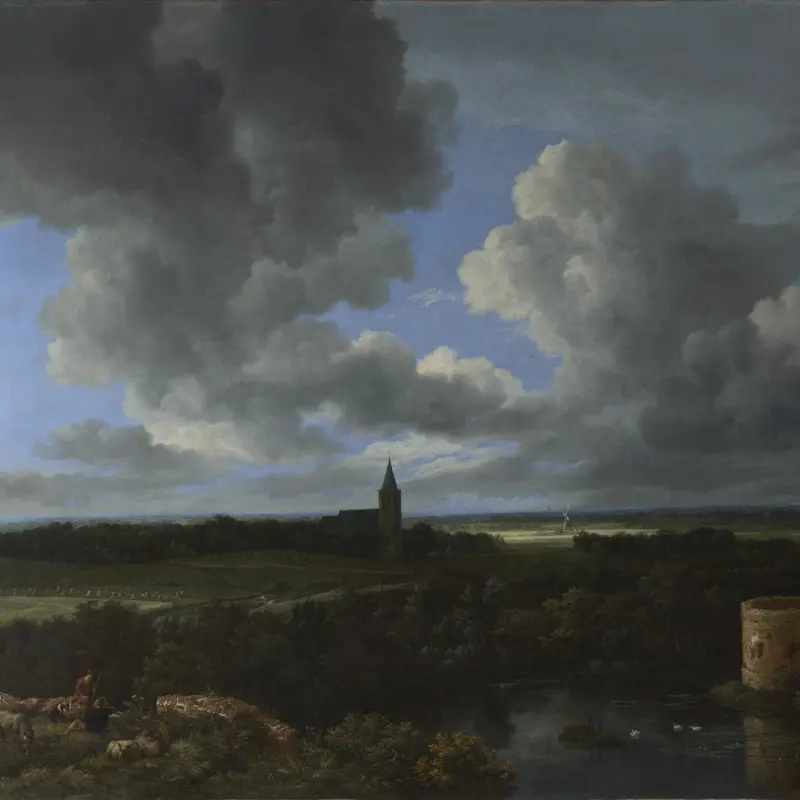
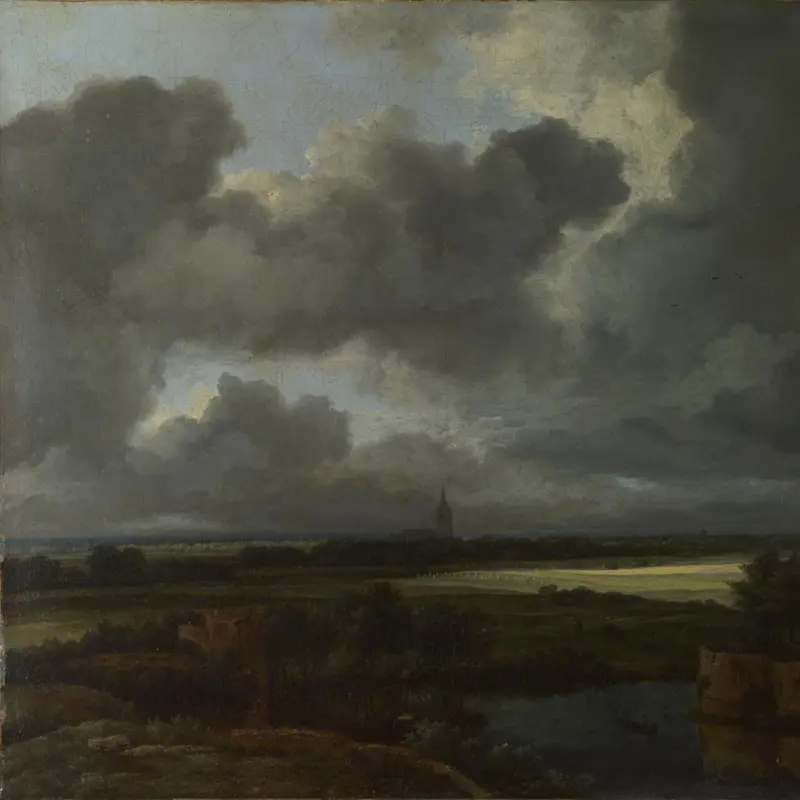
In this bright city scene, small yet grand, Jacob van Ruisdael celebrates the size and wealth of Amsterdam, then the largest and most important port in Europe. He is better known, though, for his mysterious, moody landscapes and sweeping views of the countryside, like the Gallery’s Extensive Landscape with Ruins.
Myriad houses cling together, tiny as dolls’ houses under the wide vault of the sky. They are tall and narrow, jostling for space, some almost seeming to topple into the canal. The rising sun warms the brick facades, making them glow a soft, deep gold and picking out details of windows and gables.
Although perhaps idealising the landscape, Ruisdael also minimises the city and its glamour. The Oud Kerk stands out, just as it once shaped the lives of the citizens. The gleaming water, vast sky, drifting clouds and circling seabirds remind us of a greater theme in his work: God and nature rising above human ambition.
In-depth
In this bright city scene, small yet grand, Jacob van Ruisdael celebrates the size and wealth of Amsterdam, then the largest and most important port in Europe. He is better known, though, for his mysterious, moody landscapes and sweeping views of the countryside, like An Extensive Landscape with Ruins.
Myriad houses cling together, tiny as dolls’ houses under the wide vault of the sky. They are tall and narrow, jostling for space, some almost seeming to topple into the canal. This is the Damrak, where some of the wealthiest merchants and dignitaries lived and carried out business. The luxury goods that made the city prosperous are stored safely high up in their garrets beneath the pointed roofs, hauled by cranes built into the properties themselves. An interior much like one in these houses, with its long, front-to-back passageway opening to face the dwelling opposite, can be seen in Pieter de Hooch’s poetic Courtyard of a House in Delft.
The rising sun warms the brick facades, making them glow a soft, deep gold and picking out details of windows and gables. It also highlights the Oud Kerk behind them, already more than 300 years old when the picture was painted. Its tower is like a tiered wedding cake, piercing the skyline and pointing to heaven.
To prepare his drawing, Ruisdael climbed high onto the scaffolding around Amsterdam’s new and splendid Town Hall (now the Royal Palace). In the painting, he includes a single metal pole jutting out at an angle. It mirrors the slanting row of Damrak houses, creating a strong sense of perspective and drawing the viewer’s eye into the distance. Across the glistening IJ – the wide stretch of water that was once Amsterdam’s busy bay – we notice a forest of masts and rigging, signs of the trade that brought great wealth to the city. Other boats are moored along the Damrak: barges and galjoots, small inshore vessels, their white sails catching the light. These nimble craft carried goods and people to and from the waterfront, keeping the city’s harbour in constant motion.
In 1625 the population of Amsterdam was estimated at just over 100,000. By the time the picture was painted, it had doubled. But Ruisdael does not include even one human figure in his cityscape. He lets the close-packed maze of streets and dwellings tell its own story. The deep shadows that indicate a break in the buildings for streets or canals serve to highlight the surrounding jumble of rooftops. Anyone counting the chimney pots would have quite a challenge.
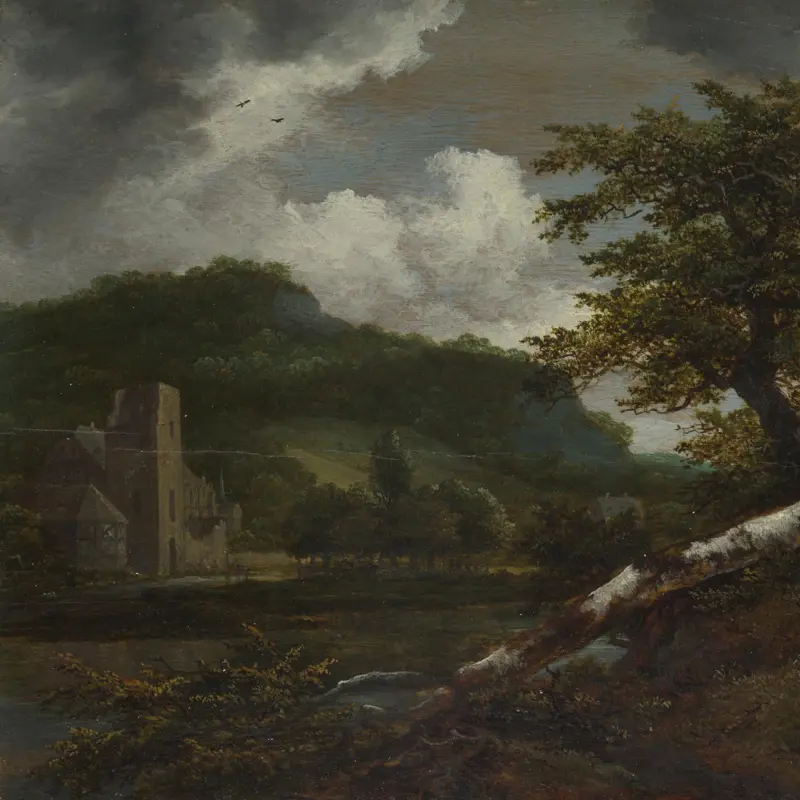
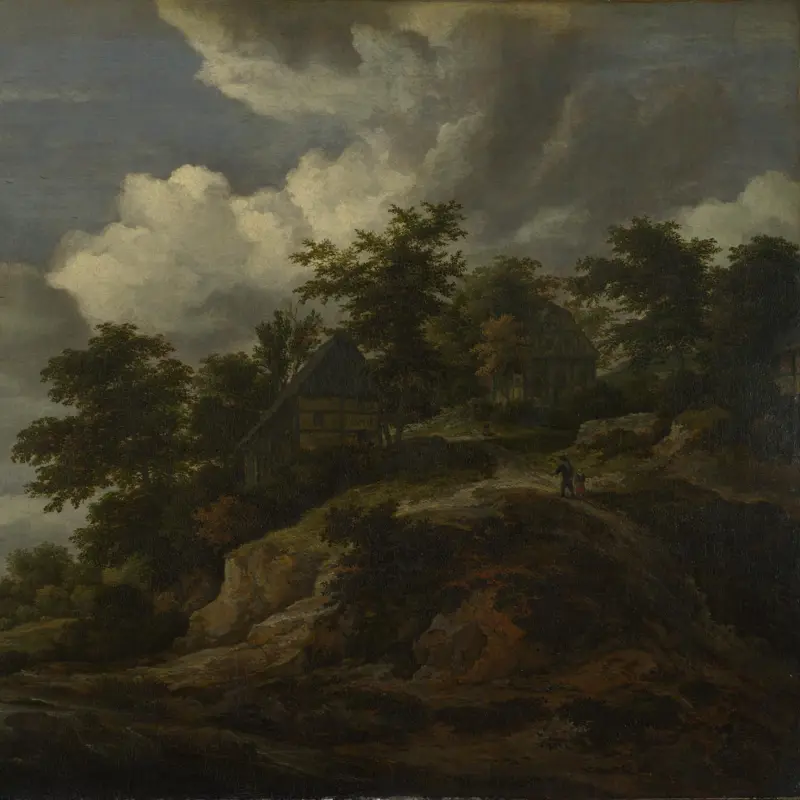
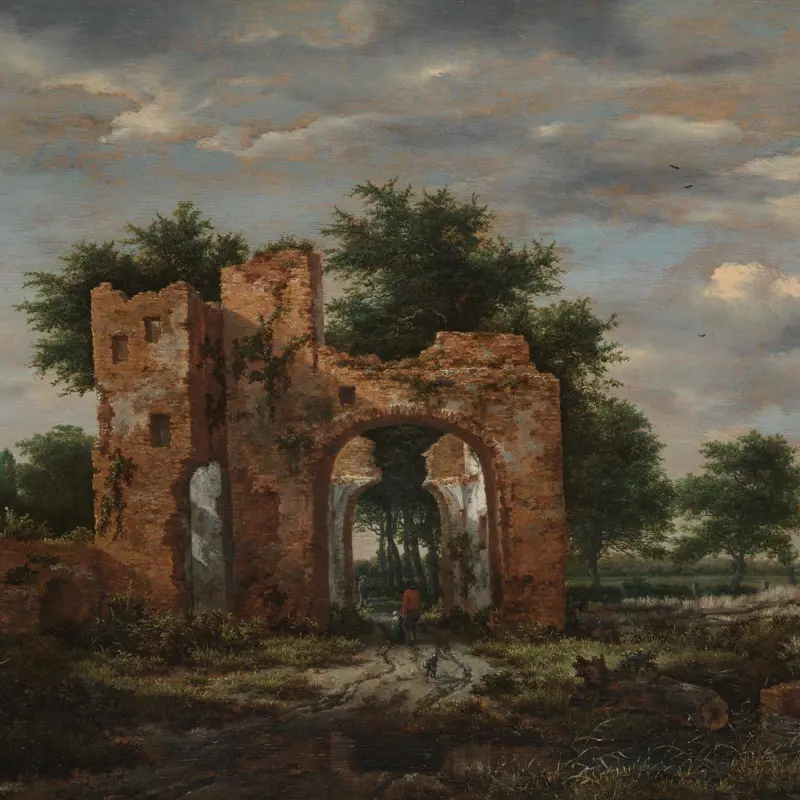
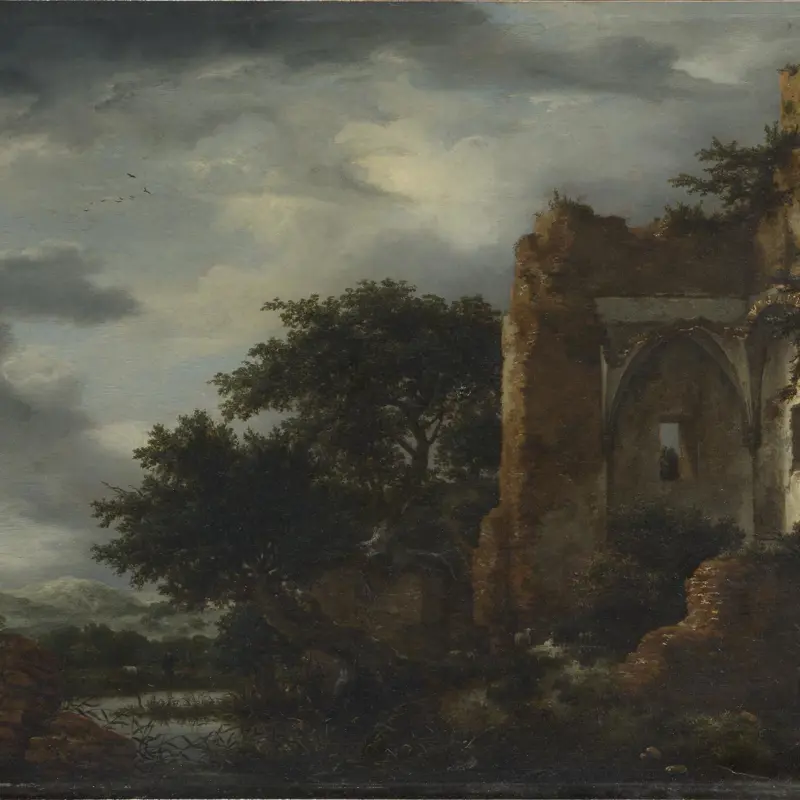
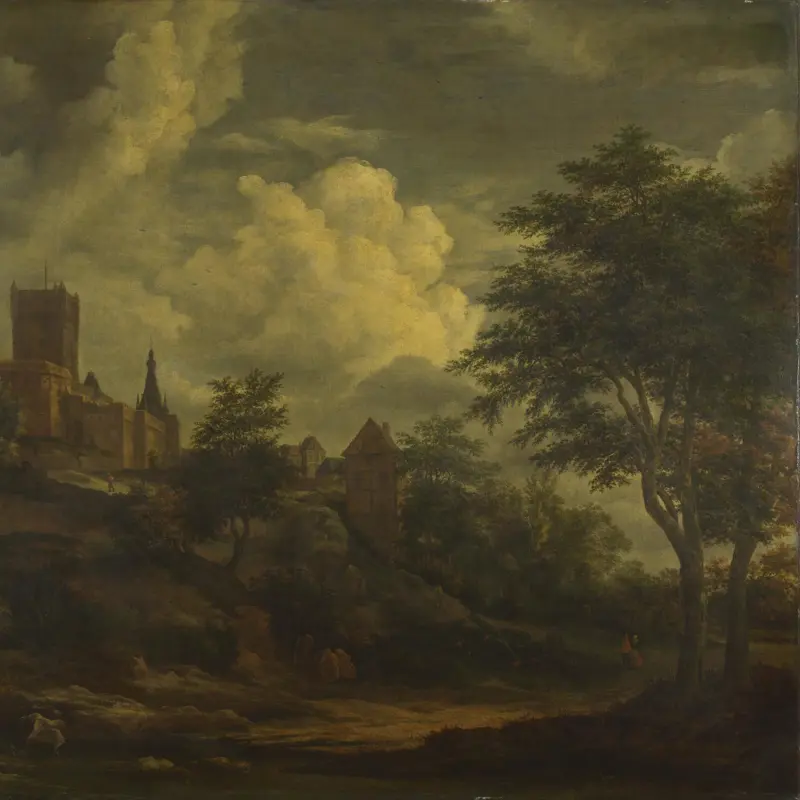
Ruisdael may idealise the city, giving it a fairy-tale feel through soft, glowing light. We see this in A Landscape with a Ruined Castle and a Church and A Ruined Castle Gateway too. Yet he also seems to downplay Amsterdam’s size and splendour. The Oud Kerk stands out, just as it once shaped the lives of the citizens. Above the city, the gleaming water, vast sky, drifting clouds and circling seabirds remind us of a greater theme in his work: God and nature rising above human ambition.
Key facts
Details
- Full title
- A Panoramic View of Amsterdam looking towards the IJ
- Artist
- Jacob van Ruisdael
- Artist dates
- 1628/9? - 1682
- Date made
- About 1665-70
- Medium and support
- Oil on canvas
- Dimensions
- 41.3 × 40 cm
- Inscription summary
- Signed
- Acquisition credit
- On loan from a private collection
- Inventory number
- L1052
- Location
- Room 16
- Image copyright
- On loan from a private collection, © Private collection 2011
- Collection
- Main Collection
About this record
If you know more about this work or have spotted an error, please contact us. Please note that exhibition histories are listed from 2009 onwards. Bibliographies may not be complete; more comprehensive information is available in the National Gallery Library.